If you’ve noticed an unusual insect with spotted wings hopping, flying, or clustering on trees, fences, or garden plants, you may be looking at the spotted lanternfly.
At first glance, it can seem harmless – even strikingly beautiful. But this invasive insect is anything but benign.
The spotted lanternfly (Lycorma delicatula) spreads rapidly, feeds aggressively, and leaves long-lasting damage behind.
Once it establishes itself, it doesn’t just affect one plant – it disrupts entire garden ecosystems, orchards, vineyards, and landscapes.
Early detection and fast action are critical, because waiting even one season can allow populations to explode beyond easy control.
What Is the Spotted Lanternfly?
The spotted lanternfly is an invasive planthopper, not a fly, originally native to parts of China, India, and Vietnam.
It was first detected in the United States in 2014 and has since spread rapidly across multiple regions, hitchhiking on vehicles, firewood, outdoor furniture, and garden materials.
Its success as an invader comes from three key traits:
- It reproduces in large numbers
- It feeds on a wide range of plants
- It has few natural predators outside its native range
Because local ecosystems didn’t evolve alongside this insect, plants and beneficial insects are poorly equipped to keep it in check.
How to Identify the Spotted Lanternfly (At Every Stage)
One reason lanternflies spread so easily is that people don’t recognize them early enough. Identification is essential.
Egg Masses (The Most Dangerous Stage to Miss)
Egg masses are laid in fall and overwinter unseen. They look like:
- Gray, tan, or mud-like smears
- Flat patches about 2–4 cm long
- Found on tree bark, stones, wood, fences, pots, and outdoor furniture
Each egg mass can contain 30–50 eggs. Missing just a few masses allows hundreds of lanternflies to hatch in spring.
Nymphs (Spring to Early Summer)
Young lanternflies appear in stages:
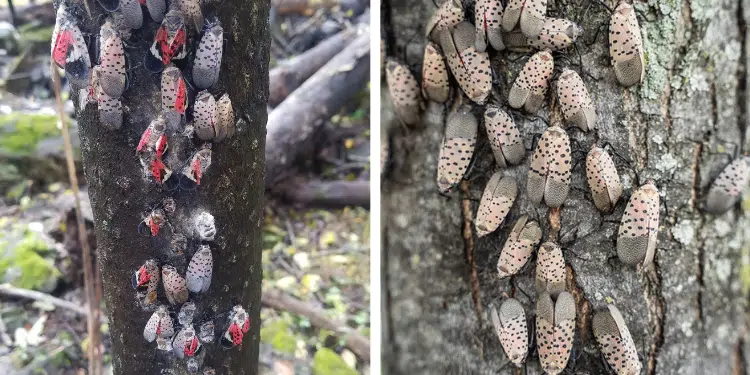
- Early nymphs are black with white spots
- Later nymphs turn bright red with black and white markings
At this stage, they are highly mobile and feed aggressively on tender plant tissue.
Adults (Mid-Summer to Fall)
Adult lanternflies are easy to recognize:
- Gray forewings with black spots
- Bright red, black, and white underwings when opened
- About 2.5 cm long
- Strong jumpers, short-distance fliers
Adults often gather in large groups, especially on tree trunks.
Why the Spotted Lanternfly Is So Dangerous
Unlike many garden pests that attack one crop or plant family, spotted lanternflies are generalist feeders.
They feed by piercing plant tissue and sucking sap, weakening plants over time rather than killing them instantly.
This feeding behavior causes:
- Reduced plant vigor
- Leaf wilting and yellowing
- Dieback of branches
- Increased susceptibility to disease and winter damage
But the real problem goes beyond feeding.
Honeydew: The Sticky Signal of Trouble
As lanternflies feed, they excrete large amounts of honeydew, a sugary waste product that coats leaves, stems, and anything below the plant.
This sticky residue:
- Attracts ants, wasps, and flies
- Encourages sooty mold growth
- Blocks sunlight from leaves
- Interferes with photosynthesis
Sooty mold doesn’t just look bad – it actively weakens plants by reducing their ability to produce energy.
If you notice black moldy coatings on leaves or sticky surfaces beneath trees, lanternflies may already be present.
Plants Most at Risk in Gardens and Landscapes
Spotted lanternflies attack over 70 plant species. Some of their preferred hosts include:
- Fruit trees (apple, peach, cherry, grape)
- Maples, walnuts, birch, and willow
- Roses and ornamental shrubs
- Grapevines (one of their most destructive targets)
They are especially drawn to tree of heaven (Ailanthus altissima), an invasive tree that often acts as a breeding hub.
Where tree of heaven grows unchecked, lanternfly populations explode.
Why Spotted Lanternflies Spread So Fast
The lanternfly’s spread isn’t just about flying. In fact, adults are weak fliers. Their true advantage is human movement.
Egg masses are laid on:
- Firewood
- Vehicles and trailers
- Garden tools
- Outdoor furniture
- Shipping materials
They survive long journeys unnoticed, allowing the insect to colonize new areas quickly. This makes backyard detection just as important as large-scale agricultural monitoring.
Why Waiting Makes the Problem Worse
Many gardeners assume nature will balance itself out. With spotted lanternflies, that balance doesn’t happen quickly enough.
Without intervention:
- Egg masses hatch by the hundreds
- Nymphs spread across multiple host plants
- Adults lay eggs in new locations
- The infestation expands exponentially each year
By the time plants show severe damage, populations are already well established.
What to Do Immediately If You See a Spotted Lanternfly
If you spot one, action should be immediate and decisive.
Kill on Sight (Yes, Really)
In regions where lanternflies are invasive, authorities recommend killing them whenever possible. Crushing them is effective, especially during the nymph stage.
This may feel extreme, but allowing them to survive contributes directly to spread.
Check for Egg Masses
Inspect:
- Tree trunks
- Fence posts
- Raised beds
- Garden furniture
- Pots and planters
Egg masses can be scraped off using a stiff card and destroyed by placing them in alcohol or sealed bags. Simply knocking them to the ground is not enough.
Report Sightings Where Required
In many areas, spotted lanternfly sightings are monitored by agricultural agencies. Reporting helps track spread and supports regional control efforts.
Even if reporting isn’t mandatory, documenting sightings helps gardeners stay alert.
Why Chemical Sprays Are Not a Long-Term Solution
While insecticides can kill lanternflies, they come with serious downsides:
- They harm beneficial insects
- They don’t prevent reinfestation
- Eggs are often unaffected
- Repeated use disrupts ecosystems
Sprays may offer temporary relief, but they don’t solve the underlying problem. Integrated approaches are far more effective.
Natural and Physical Control Methods That Help
Physical removal remains one of the most effective strategies for home gardens.
Tree banding can trap nymphs as they climb trunks, though bands must be checked regularly to avoid harming birds or beneficial insects.
Removing tree of heaven where possible reduces breeding hubs dramatically. In many regions, this single step has the biggest impact on population reduction.
Encouraging native predators may help over time, but lanternflies currently face limited natural control outside their native range.
Why Gardens Play a Key Role in Control
Large infestations don’t start in orchards – they often begin in residential landscapes where egg masses go unnoticed.
Home gardens act as stepping stones between wild areas and agricultural land. Early action in gardens can slow regional spread significantly.
This makes gardeners a crucial line of defense.
How to Prevent Bringing Lanternflies Home
Prevention matters just as much as removal.
Before moving:
- Firewood
- Camping gear
- Vehicles
- Outdoor décor
Inspect surfaces carefully. One unnoticed egg mass can start a new infestation miles away.
Seasonal Awareness Makes a Difference
Understanding seasonal behavior improves control:
- Fall: focus on egg mass removal
- Spring: watch for nymphs
- Summer: reduce adult populations
- Late summer: monitor host trees closely
Consistent awareness prevents sudden population spikes.
Why This Insect Should Not Be Ignored
The spotted lanternfly isn’t just another garden pest. It’s an ecosystem disruptor capable of altering landscapes, weakening trees, and harming food production.
What makes it especially dangerous is how quietly it spreads at first. By the time damage becomes obvious, control is far more difficult.
If you’ve seen this bug in your garden, don’t wait. The spotted lanternfly is one of those rare cases where fast, decisive action truly makes a difference.